Control, Safety and Vision Systems for Attractions and Venues
Theme park and venue automation is not only PLC programming. A reliable control system must combine motion control, safety logic, operator interfaces, supervision, electrical design, emergency procedures and validation documentation into one coherent engineering package.
SEETECH develops these systems for attractions, sports facilities and technical venues that need more than isolated automation work. Our solutions help operators improve safety, reliability, maintainability and operational visibility while preparing the asset for inspection, certification and long-term service.
Each project is engineered around the real installation: ride sequence, passenger flow, safety functions, block zones, degraded operation, evacuation procedure, maintenance access, available documentation and audit requirements.
RIDE CONTROL SYSTEMS ENGINEERING
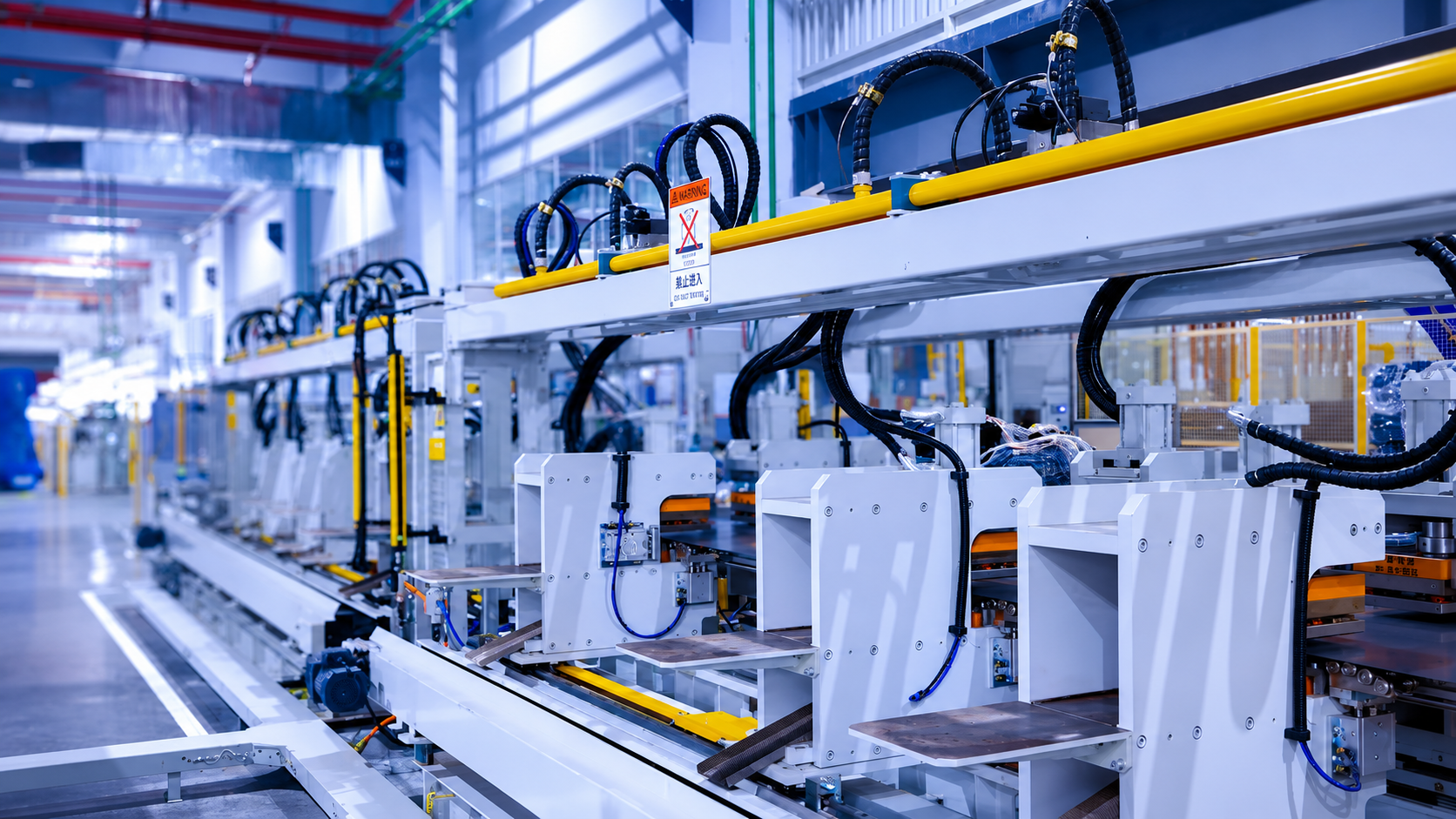
Modern attractions, sports installations and industrial machines all depend on reliable real-time control. SEETECH specializes in ride control systems engineering, delivering deterministic control architectures for attractions, automated sports systems and industrial automation.
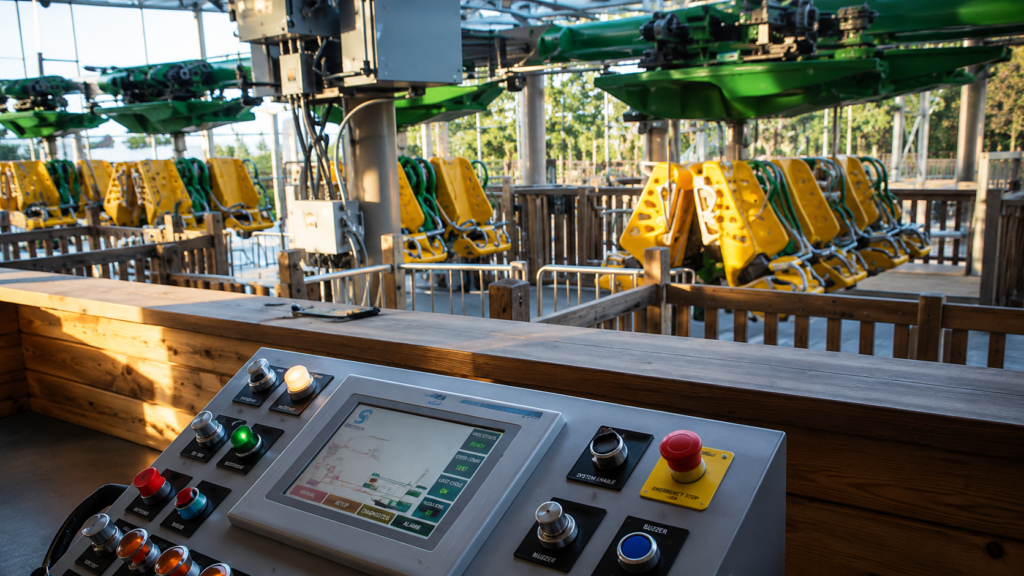
Our systems combine industrial PLCs, HMIs, supervisory software, sensors and instrumentation to manage dispatch logic, block zones, safety gates, emergency stops, evacuation procedures and degraded operation modes with real-time precision. We also integrate AI computer vision tracking systems for advanced monitoring, automation and positioning.
FUNCTIONAL SAFETY ENGINEERING SERVICES
Attractions, sports installations and industrial machines cannot rely on weak safety logic. SEETECH provides functional safety engineering services for systems where people, motion, machinery and real-time control interact.
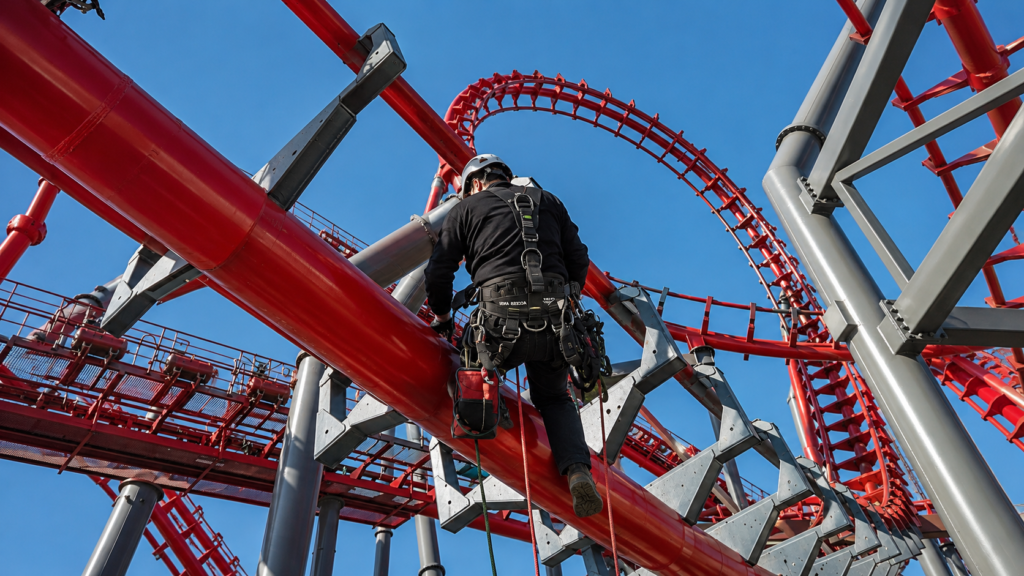
Our work covers hazard and risk analysis, SIL target definition, safety requirements, safety PLC architecture, safe motion, safe I/O, validation testing and safety documentation under IEC 61508 and IEC 62061. We engineer with Pilz, Siemens Safety, Allen-Bradley GuardLogix and equivalent platforms, delivering dossiers suitable for TÜV, Bureau Veritas, DEKRA and other accredited auditors.
AI COMPUTER VISION TRACKING SYSTEMS
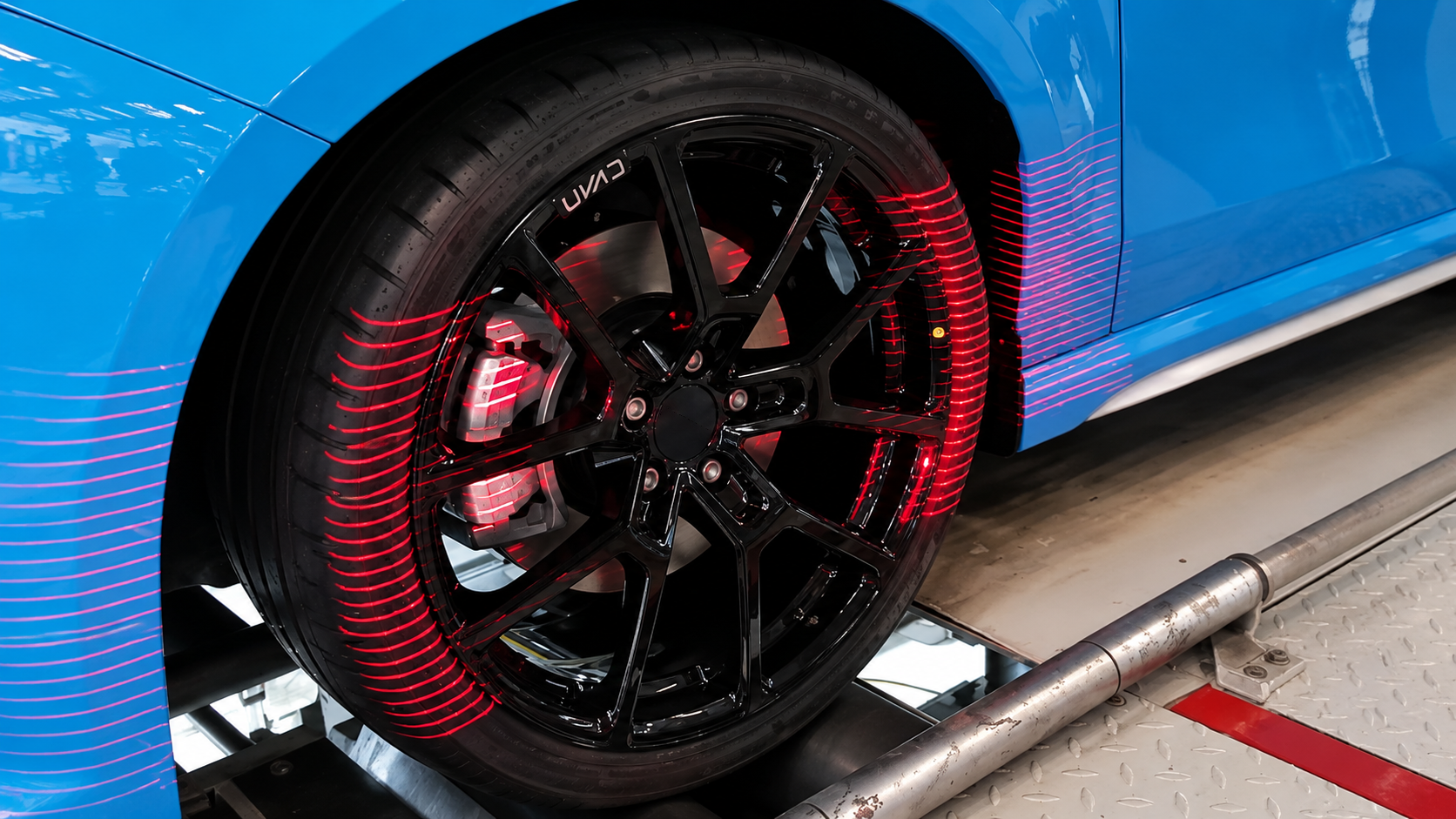
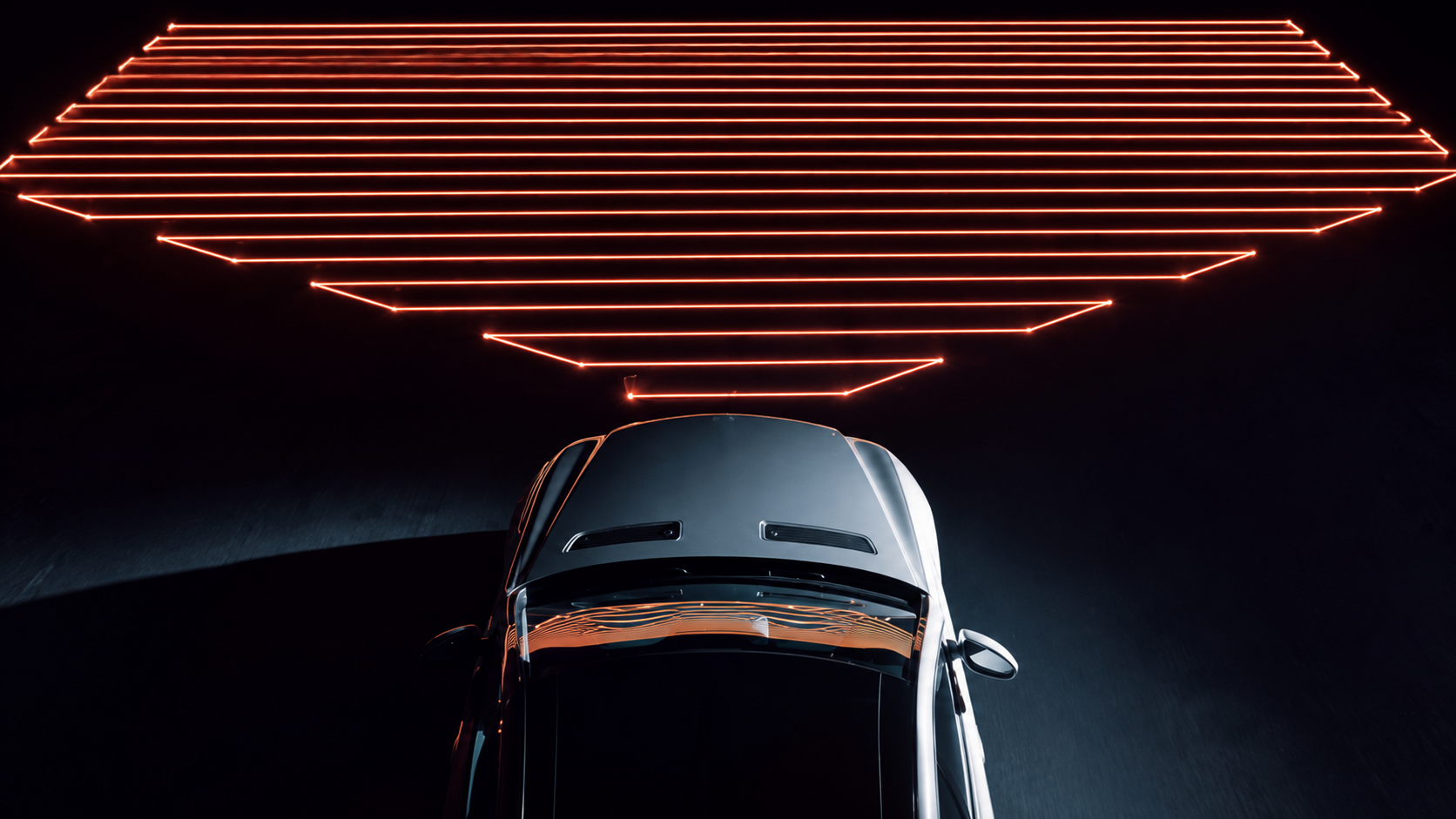
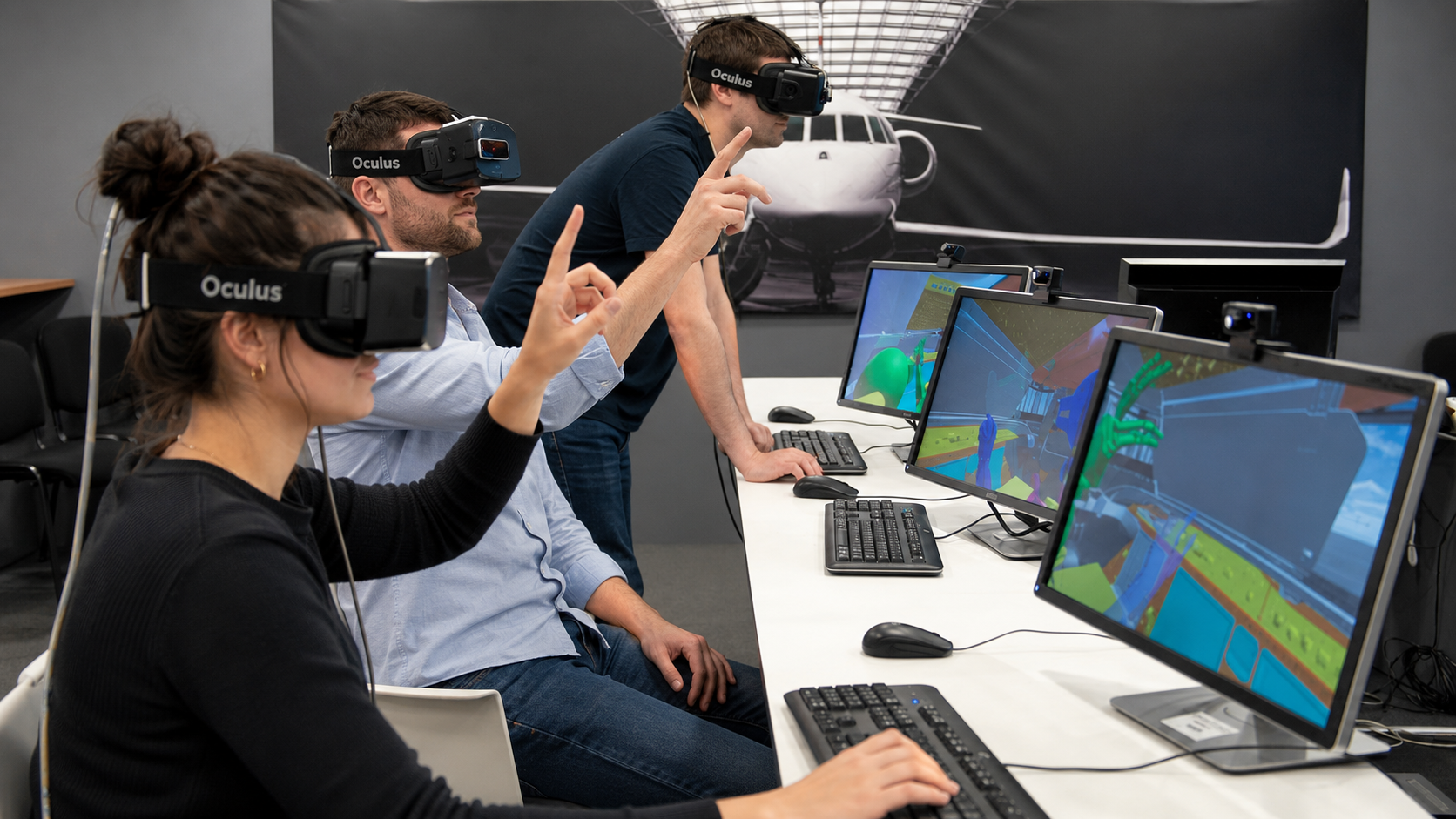
SEETECH develops AI computer vision tracking systems for environments where cameras must measure, detect and trigger action in real time. Applications include ball tracking, ride-vehicle monitoring, passenger-restraint detection, player analytics, crowd-density analysis, quality inspection, component tracking and PPE compliance.
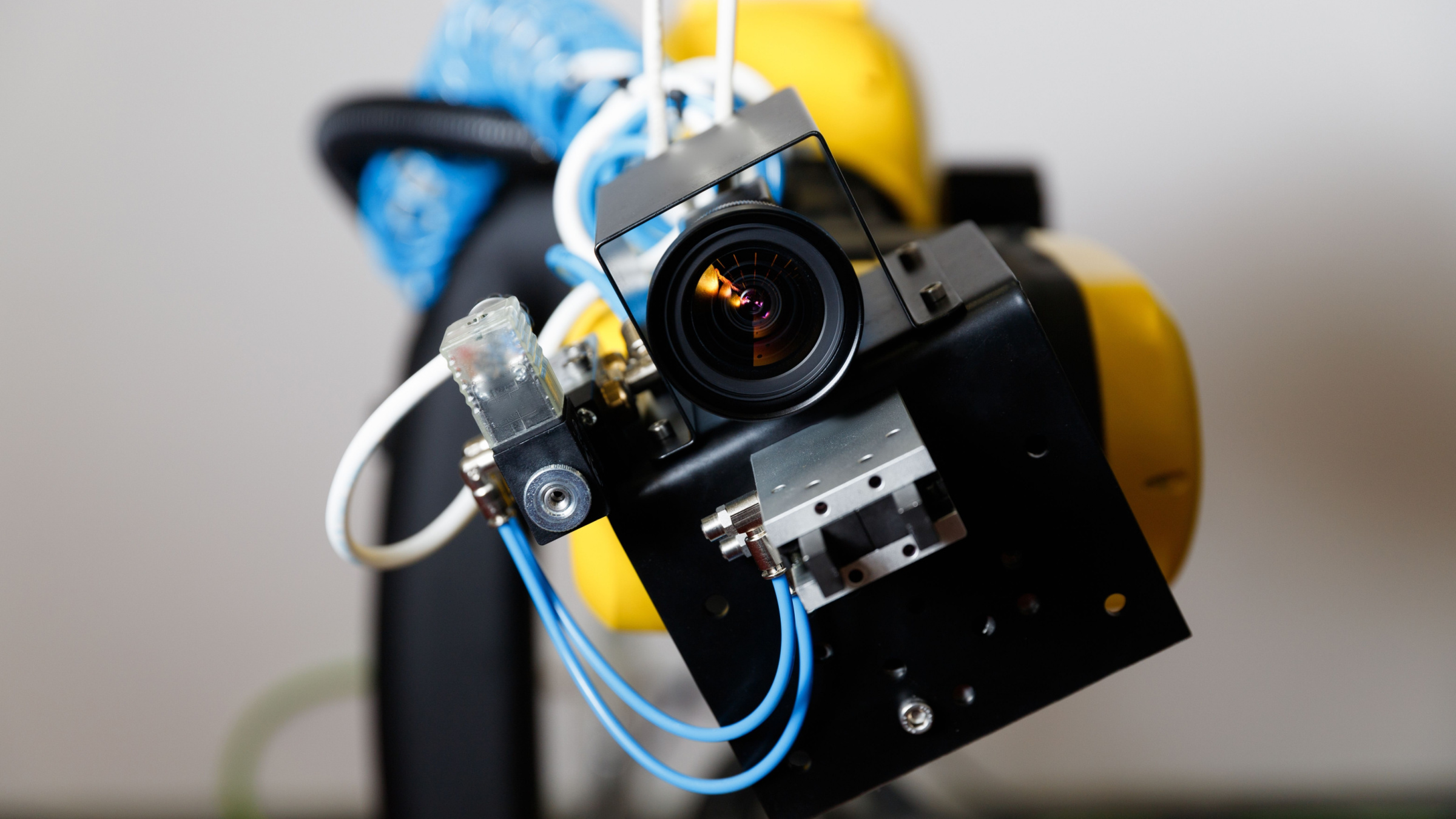
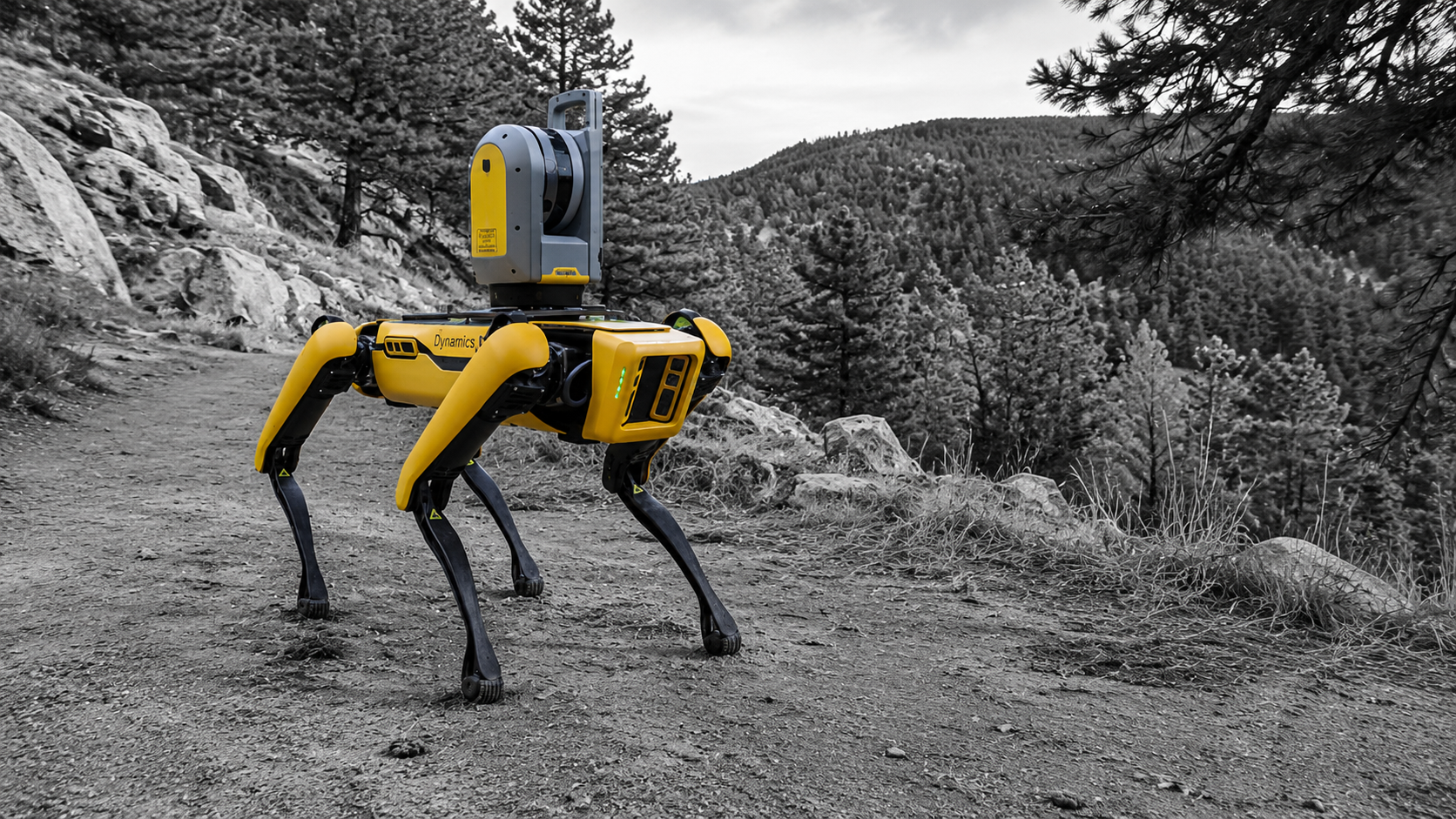
Our systems combine calibrated multi-camera arrays, GPU and edge inference, custom deep-learning models and integration with PLC, SCADA and ERP layers.
ELECTRICAL DESIGN & POWER DISTRIBUTION
SEETECH designs LV and MV electrical systems for attractions, sports venues, stadiums and industrial sites that require clean, safe and reliable power under continuous operation.
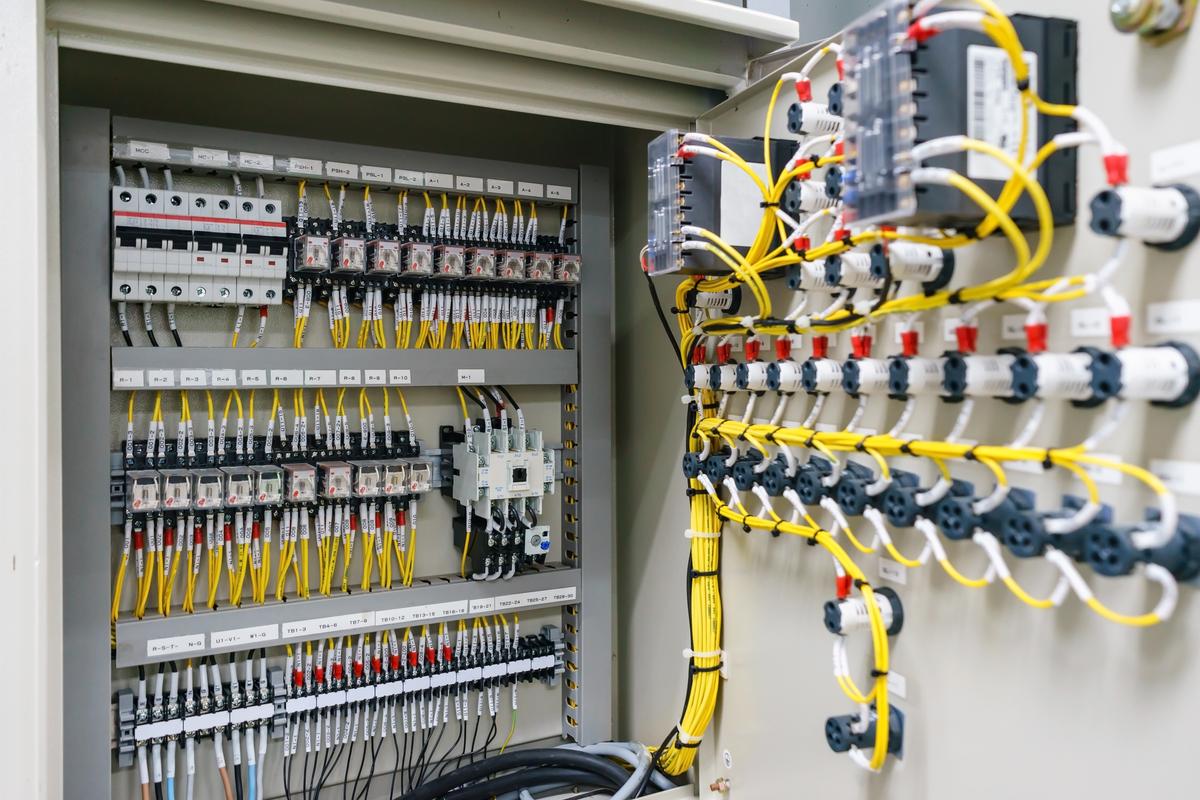
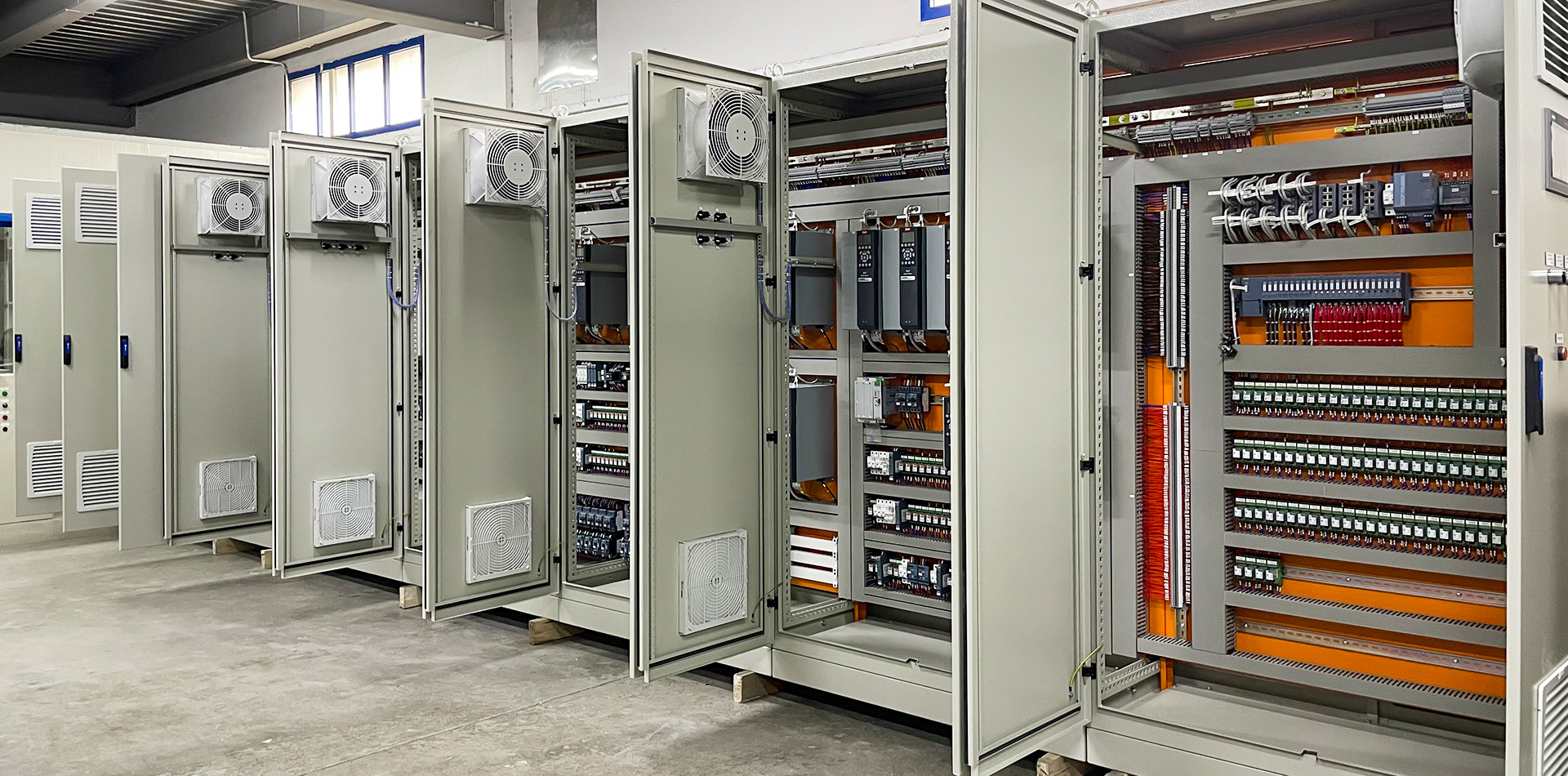
Our work includes main distribution boards, motor control centres, VFD cabinets, grounding and bonding, lightning protection, selective coordination, single-line diagrams, schematics, panel layouts and cable schedules. Every design supports the ride control systems, functional safety engineering services and automation architecture as one coherent engineering package.
SCADA & REMOTE MONITORING
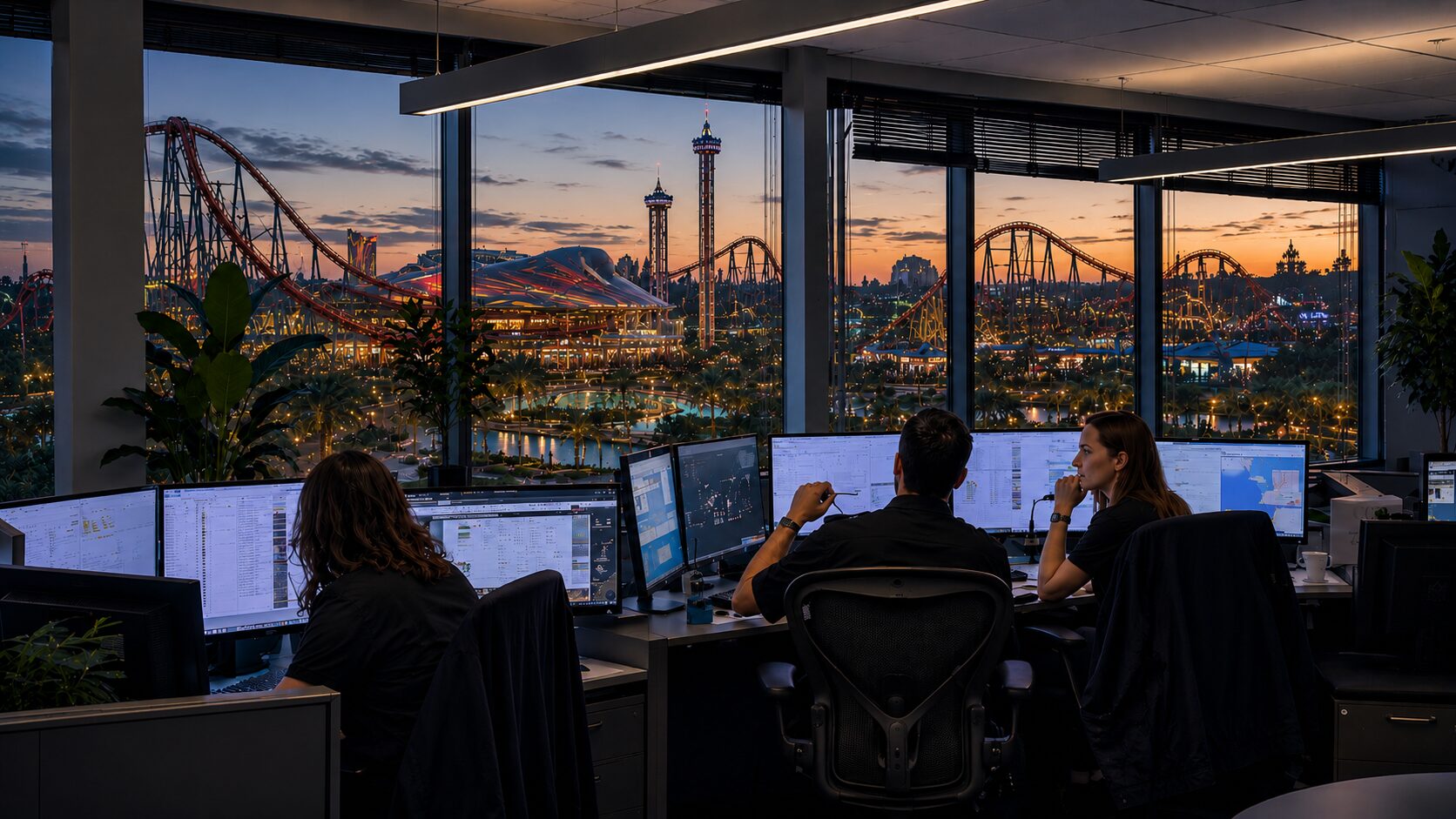
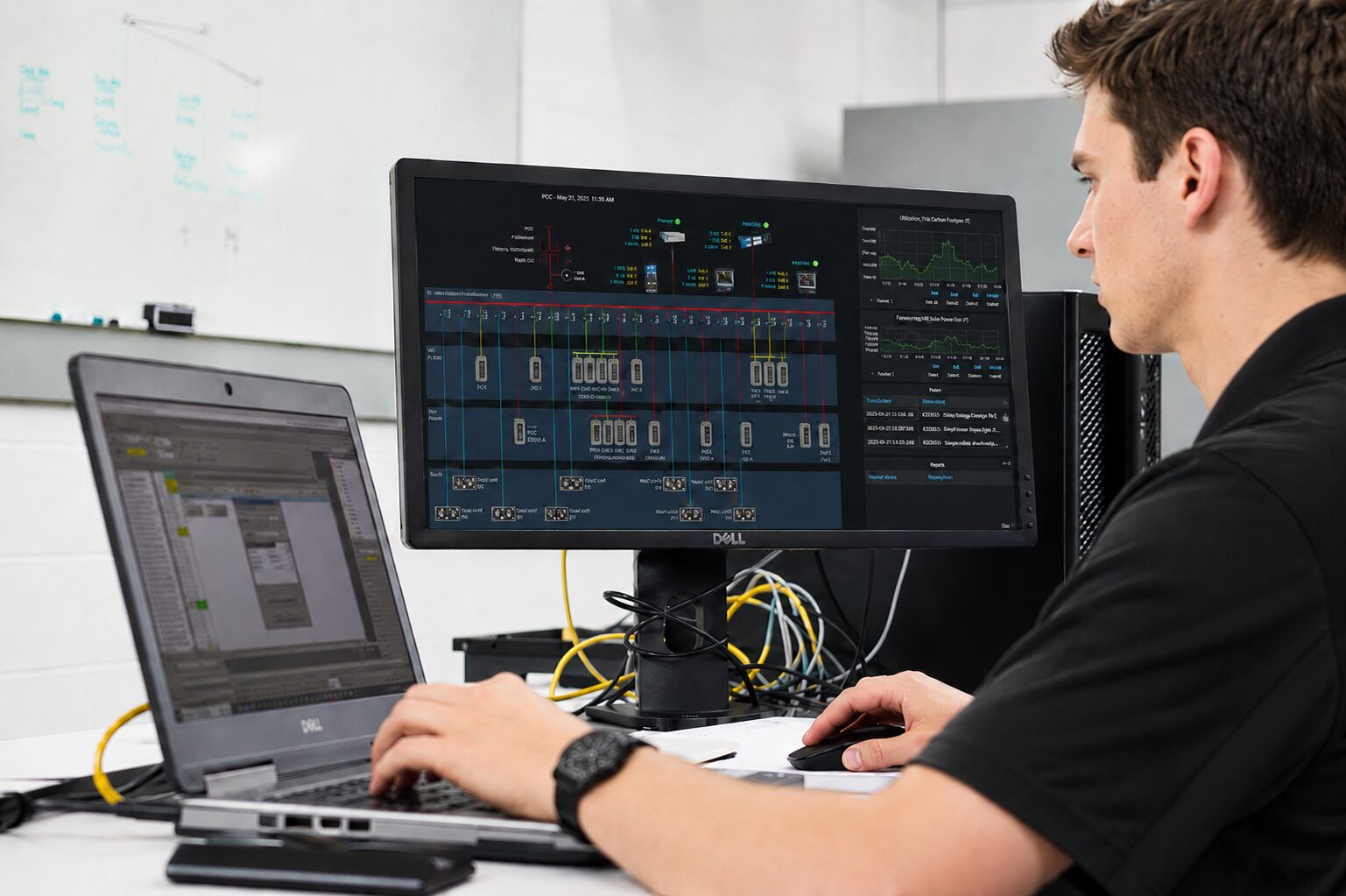
SEETECH deploys SCADA and IIoT systems for parks, stadiums and industrial sites that need live visibility over rides, machines, courts, broadcast systems and production lines.
Our solutions use Ignition, WinCC, Wonderware or open-stack platforms to track status, faults, cycle counts, throughput, downtime and predictive maintenance alerts. We integrate PLC data with AI computer vision tracking systems in secure IEC 62443-based architectures with segmented OT networks, hardened gateways, role-based access and audit logging.
PRE-HOMOLOGATION & COMPLIANCE REVIEW
SEETECH performs pre-homologation and compliance reviews for attractions, sports systems and industrial assets before audit by TÜV, Bureau Veritas, DEKRA or other accredited bodies.
We review documentation, safety cases, ride control systems engineering, electrical compliance, structural calculations, functional safety engineering services, AI vision validation evidence and operating procedures. The goal is simple: identify weak points before the certifier does and provide the engineering fixes needed for a cleaner homologation process.
RETROFITS & CONTROL SYSTEM MODERNIZATION
SEETECH modernizes legacy attractions, stadium systems and industrial assets with obsolete PLCs, unsupported drives, missing schematics or unreliable control architectures.
Our retrofits cover hardware replacement, logic reverse-engineering, ride control systems engineering, safety circuit upgrades, SCADA integration and AI computer vision tracking systems where needed. Each project is scoped, simulated and pre-tested off-site to reduce shutdown time and reopen the asset on schedule.
LET’S DISCUSS YOUR CONTROL, SAFETY OR VISION SYSTEM
Tell us about your attraction, sports installation, venue or industrial asset. Our engineering team will review your requirements and propose the right control, safety, vision or compliance solution.
1. What is ride control systems engineering?
Ride control systems engineering is the design, programming and integration of the control architecture that manages how an attraction operates. It can include PLC software, HMI screens, dispatch logic, safety gates, restraints, sensors, drives, emergency stops, operator commands, fault handling and supervision systems.
In theme parks and entertainment venues, the control system must do more than move equipment. It must coordinate normal operation, degraded modes, safety functions, diagnostics, maintenance access and operator workflow. Industry organizations such as IAAPA promote effective ride safety regulation and structured safety practices for attraction operators and manufacturers.
2. What does a ride control system manage?
A ride control system manages the operational logic of an attraction. This can include start sequences, dispatch conditions, block zones, position monitoring, speed control, access gates, restraint signals, emergency stop circuits, maintenance modes, alarms and operator permissions.
For complex attractions, the system must coordinate different machines, sensors and safety devices in real time. Amusement ride design, manufacture, operation, maintenance and inspection are covered by standards developed through groups such as ASTM Committee F24 on Amusement Rides and Devices.
3. Why is functional safety important in attractions?
Functional safety is critical because many attractions include moving equipment, passenger access, restraint systems, gates, platforms, elevated structures or automated sequences. Safety functions must be designed so they respond correctly when a fault, unsafe condition or abnormal operating situation occurs.
Amusement ride safety systems can include safety PLCs, emergency stop circuits, interlocks, safe inputs and outputs, access control, restraint monitoring and validation procedures. Control-system safety design is often supported by standards such as ISO 13849-1 safety-related parts of control systems.
4. Which standards are relevant for amusement ride safety?
The applicable standards depend on the country, attraction type, certifier, client requirements and local regulation. A project may need to consider amusement ride standards, machinery safety, electrical safety, functional safety, risk assessment, control-system validation and documentation requirements.
Useful references include ASTM amusement ride safety standards, ISO 12100 safety of machinery and the IEC 61508 functional safety overview. SEETECH designs the engineering package around the requirements defined for each specific project.
5. How are PLC and HMI systems used in ride control?
The PLC is the main control layer that executes the ride logic, reads sensors, controls actuators, manages sequences, handles faults and communicates with safety devices or supervisory systems. The HMI is the operator interface used to view ride status, start sequences, acknowledge alarms, select modes and support maintenance diagnostics.
For ride control systems engineering, the PLC and HMI must be reliable, clear and maintainable. Electrical and programmable control equipment used on machines is addressed by standards such as IEC 60204-1 electrical equipment of machines, which is an important reference for machine electrical systems.
6. Can AI vision be used in theme parks and attractions?
Yes. AI vision can be used to detect, track or verify specific conditions in attractions, sports venues and entertainment facilities. Possible uses include ride vehicle tracking, passenger position monitoring, restricted-area detection, restraint verification, ball tracking, crowd flow analysis or operator-assistance alerts.
The important point is that AI vision should be integrated as an engineering tool, not as a disconnected camera experiment. For projects involving AI-based detection, risk management and validation should be considered carefully, using references such as the NIST AI Risk Management Framework.
7. Why use SCADA or remote monitoring in attractions?
SCADA and remote monitoring systems give technical teams visibility over ride status, alarms, cycle counts, downtime, faults, energy data, maintenance events and equipment conditions. This is useful for parks, sports venues and entertainment facilities with multiple technical systems that need to be supervised from one place.
SCADA can connect PLCs, sensors, electrical systems, AI vision events and maintenance data into dashboards for operators and engineers. Industrial communication technologies such as OPC UA help structure data exchange between machines, control systems and higher-level monitoring platforms.
8. When should an attraction control system be retrofitted?
A retrofit is usually needed when an attraction depends on obsolete PLCs, unsupported drives, missing source code, undocumented wiring, outdated HMI screens, weak diagnostics or safety systems that no longer match the operating requirements. In many cases, the mechanical asset still has value, but the control architecture has become a risk.
A good retrofit can improve reliability, diagnostics, maintainability, electrical safety, software support and data visibility without replacing the complete attraction. These projects should be planned carefully because shutdown windows are limited and the system must return to operation with clear testing, documentation and validation.
9. What should be checked before homologation or inspection?
Before formal inspection, the engineering package should be reviewed for control logic, safety architecture, electrical drawings, risk assessment, validation records, operating procedures, maintenance modes, emergency stops, access control, alarm handling and documentation consistency.
Pre-homologation reviews help detect weak points before they become expensive certification problems. For connected technical systems, the structure between control layers, operations systems and business systems can also follow integration principles such as ISA-95 enterprise-control system integration.
10. Why choose SEETECH for theme park engineering services?
SEETECH provides theme park engineering services for attractions, sports venues and entertainment systems that require reliable control, safety, electrical and monitoring solutions. Our work combines PLC/HMI software, functional safety, electrical design, AI vision, SCADA monitoring, commissioning, documentation and retrofit experience.
The objective is not to deliver isolated panels or software fragments, but complete attraction control architectures that can be operated, maintained and supported in real conditions. SEETECH helps clients modernize existing systems, develop new ride control solutions and prepare technical documentation for safer, cleaner and more maintainable operation.